
Monday 23rd December 2024
It was an interesting day, I certainly didn’t expect to write 35 pages for sure! It all started with the verse in Luke 21, about the poor widow giving all she had. When I look back on this now, I can see how it relates to what I’ve been doing now for over quite a few years. It also provided more clarity about tithing, why, what for etc. I used my study bible which is an NIV (New International Version) and this post brings together relevant verses, questions that arose, and footnotes surrounding this deep dive I ended up in.
Luke 21 – Verses 1 to 4 – A Poor Widow Gives All She Has
As he looked up, Jesus saw the rich putting their gifts into the temple treasury. He saw a poor widow put in two very small copper coins. “I tell you the truth” he said “this poor widow has put in more than all the others. All these people gave their gifts out of their wealth; but she out of her poverty put in all she had to live on.”
FOOTNOTES – Luke 21:1,2 : Jesus was in the area of the temple called the court of women. The treasury was located there or in an adjoining walkway. In this area were seven boxes in which worshippers could deposit their ‘temple tax’ and six boxes for ‘freewill offerings’ like the one this woman gave. Not only was she poor; as a widow she had few resources for making money. Her small gift was a sacrifice but she gave it freely.
FOOTNOTES – Luke 21: 1-4 : This widow gave all she had to live on, in contrast to the way most of us handle our money. When we consider giving a certain percentage of our income a great accomplishment, we resemble those who gave “out of their wealth”. Here, Jesus was admiring generous and sacrificial giving – whether of money, time or talents – to a point beyond convenience or safety.
This is also a verse in Mark…
Mark 12 – Verses 41 to 44 – A Poor Widow Gives All She Has
Jesus sat down opposite where the offerings were put and watched the crowd putting their money into the temple treasury. Money rich people threw in large amounts. But a poor widow came and put in two very small copper coins, worth only a fraction of a penny.
Calling his disciples to him Jesus said “I tell you the truth, this poor widow has put more into the treasury than all the others. They all gave out of their wealth; but she, out of her poverty, put in everything – all she had to live on.”
FOOTNOTES Mark 12: 41-44 : In the Lord’s eyes, this poor widow gave more than all the others put together, though her gift was by far the smallest. The value of the gift is not determined by it’s amount, but by the spirit in which it is given. A gift given grudgingly or for recognition loses it’s value. When you give, remember – gifts of any size are pleasing to God when they are given out of gratitude and a spirit of generosity.
Question: What was the temple tax?
Found in John 2:14
In the temple courts he (Jesus) found men selling cattle, sheep and doves, and others sitting at tables exchanging money.
FOOTNOTES John 2:14 – The temple area was always crowded during Passover with thousands of out-of-town visitors. The religious leaders crowded it even further by allowing money changers and merchants to setup booths in the court of the Gentiles. They rationalised (explained/justified) this practice as convenience for the worshippers and as a way to make money for the temple upkeep. But the religious leaders did not seem to care that the court of the Gentiles was so full of merchants that foreigners found it difficult to worship. and worship was the main purpose for visiting the temple. No wonder Jesus was angry!
FOOTNOTES John 2:14 – The temple tax had to be paid in local currency, so foreigners had to have their money changed. But the money changers often would charge exorbitant (unreasonably high charge) exchange rates. The people were also required to make sacrifices for sins. Because of the long journey, many could not bring their own animals. Some who brought animals would have them rejected for imperfections. So animal merchants would do a flourishing business in the temple courtyard. The price of sacrificial animals was much higher in the temple area. Jesus was angry at the dishonest, greedy practices of the money changers and merchants, and he particularly disliked their presence in the temple grounds. They were making a mockery of God’s house of worship.
FOOTNOTES John 2:14ff – John records his first clearing, or cleansing of the temple. A second clearing occurred at the end of Jesus’ ministry, about 3 years later, that event is recorded in
- Matthew 21: Verses 12-17
- Mark 11: Verses 12-19
- Luke 19: Verses 45-48
John 2: 15 – So he made a whip out of cords, and drove all from the temple area, both sheep and cattle, he scattered the coins of the money changers and overturned their tables. To those who sold doves he said “Get out of here! How dare you turn my Father’s house into a market!”
His disciples remembered that it is written “Zeal for your house will consume me.”
Then the Jews demanded of him, “What miraculous sign can you show us to prove your authority to do this?”
Jesus answered them “Destroy this temple, and I will raise it again in three days.”
The Jews replied “It has taken forty-six years to build this temple, and you are going to raise it in three days?” But the temple he had spoken of was his body.
After he was raised from the dead, his disciples recalled what he had said. Then they believed the Scripture and the words that Jesus had spoken.
Now while he was in Jerusalem at the Passover Feast, many people saw the miraculous signs he was doing and believed in his name. But Jesus would not entrust himself to them, for he knew all men, for he knew what was in a man.
FOOTNOTES – John 2:14-16 – God’s temple was being misused by people who had turned it into a marketplace. They had forgotten, or didn’t care, that God’s house is a place of worship, not a place for making profit. Our attitude towards the church is wrong if we see it as a place for personal contacts or business advantage. Make sure you attend church to worship God.
FOOTNOTES – John 2: 15, 16 – Jesus was obviously angry at the merchants who exploited those who had come to God’s house to worship. There is a difference between uncontrolled rage and righteous indignation (anger which is motivated by perception of injustice or moral lapse) yet both are called anger. We must be careful how we use the powerful emotion of anger. It is right to be angry about injustice and sin; it is wrong to be angry over trivial personal offences.
FOOTNOTES – John 2: 15, 16 – Jesus made a whip and chased out the money changers. Does his example permit us to use violence against wrongdoers? Certain authority is granted to some, but not all. For example, the authority to use weapons and restrain people is granted to police officers, but not to the general public. The authority to imprison people is granted to judges, but not to individual citizens. Jesus had God’s authority, something we cannot have. While we want to live like Christ, we should never try to claim his authority where it has not been given to us.
My question is… but what happens if the people granted authority abuse their position?
FOOTNOTES – John 2: 17 – Jesus took the evil acts in the temple as an insult against God, and thus he did not deal with them half heartedly. He was consumed with righteous anger against such flagrant (wrong/immoral/obviously offensive) disrespect to God.
FOOTNOTES – John 2: 19, 20 – The Jews understood Jesus to mean the temple out of which he had just driven the merchants and the money changers. This was the temple Zerubbabel had been built 500 years earlier, but Herod the Great had begun remodelling it, making it much larger and far more beautiful. It had been 46 years since this remodelling had started (20 B.C) and it still wasn’t completely finished. They understood Jesus’ words to mean that this imposing building could be torn down and rebuilt in three days, and they were startled.
FOOTNOTES – John 2: 21, 22 – Jesus was not talking about the temple made of stones, but about his body. His listeners didn’t realise it, but Jesus was greater than the temple. (See Matthew 12:6 – “Warning them not to tell who he was.” Jesus did not want those he healed to tell others about his miracles because he didn’t want the people coming to him for the wrong reasons. That would hinder his teaching ministry and arouse false hopes about an earthly kingdom. But the news of Jesus’ miracles spread, and many came to see for themselves.)
FOOTNOTES – John 2: 21,22 – His (Jesus’) words would take on meaning for his disciples after his resurrection. That Christ so perfectly fulfilled this prediction became the strongest proof for his claims to be God.
FOOTNOTES – John 2: 23-25 – The Son of God knows all about human nature. Jesus was well aware of the truth of Jeremiah 17:9 which states “The heart is deceitful above all things and beyond cure. Who can understand it?” Jesus was discerning, and he knew that the faith of some followers was superficial (not thorough/deep/complete). Some of the same people claiming to believe in Jesus at this time would later yell “Crucify him!” It’s easy to believe when it is exciting and everyone else believes the same way. But keep your faith firm, even when it isn’t popular to follow Christ.
Question: What was the temple treasury?
John 8:20 – He (Jesus) spoke these words while teaching in the temple area near the place where the offerings were put. Yet no one seized him, because his time had not yet come.
FOOTNOTES John 8:20 – The temple treasury was located in the court of women. In this area 13 collection boxes were setup to receive money offerings.
- 7 of the boxes were for temple tax
- 6 of the boxes were for freewill offerings
On another occasion, a widow placed her money in one of these boxes, and Jesus taught a profound lesson from her action (Luke 21: 1-4).
Question: So what is tithing that churches ask for?
Purpose and Principles of tithing can be found in
- Deuteronomy 14: 22-23
- 2 Corinthians 8: 10-15
Deuteronomy 14: 22-23
Be sure to set aside a tenth of all that your fields produce each year. Eat the tithe of your grain, new wine and oil, and the firstborn of your herds and flocks in the presence of the LORD your God at the place he will choose as a dwelling for his name, so that you may learn to revere the LORD your God always.
FOOTNOTES – Deuteronomy 14: 22, 23 – The bible makes the purpose of tithing very clear – to put God first in our lives. We are to give God the first and best of what we earn. For example, what we do first with our money shows what we value most. Giving the first part of our pay cheque to God immediately focuses our attention on him. It also reminds us that all we have belongs to him. A habit of regular tithing can keep God at the top of our priority list, and give us a proper perspective on everything else we have.
2 Corinthians 8: 10-15
And here is my advice about what is best for you in this matter. Last year you were the first not only to give but also to have the desire to do so. “Now finish the work, so that your eager willingness to do it may be matched by your completion of it, according to your means. For if the willingness is there, the gift is acceptable according to what one has, not according to what he does not have.
Our desire is not that others might be relieved while you are hard pressed, but that there might be equality. At the present time your plenty will supply what they need so that in turn their plenty will supply what you need. Then there will be equality, as it is written: “He who gathered much did not have too much, and he who gathered little did not have too little.”
FOOTNOTES: 2 Corinthians 8: 10-15
The Corinthian Church had money, and apparently they had planned to collect money for the Jerusalem churches a year previously (see also 2 Corinthians 9:2 “For I know your eagerness to help, and I have been boasting about it to the Macedonians, telling them that since last year you in Achaia were ready to give; and your enthusiasm has stirred most of them to action.)
Paul challenges them to act on their plans. Four principles of giving emerge here:
- Your willingness to give cheerfully is more important than the amount you give.
- You should strive to fulfil your financial commitments
- If you give to others in need, they will, in turn, help you when you are in need
- You should give as a response to Christ, not for anything you can get out of it. How you give reflects on your devotion to Christ.
FOOTNOTES – 2 Corinthians 8:12 – How do you decide how much to give? What about differences in the financial resources Christians have? Paul gives the Corinthian church several principles to follow:
- Each person should follow through on previous promises (2 Corinthians 8:10, 11 and 2 Corinthians 9:3 “But I am sending the brothers in order that our boasting about you in this matter should not prove hollow, but that you may be ready, as i said you would be.) + FOOTNOTES 9:3-5 Paul reminded the Corinthians to fulfil the commitment that they had already made (2 Corinthians 8:10-12) They had said that they would collect a financial gift to send to the church in Jerusalem. Paul was sending a few men ahead of him to make sure their gift was ready, so it would be a real gift and not look like people had to give under pressure at the last minute. (“ready as a generous gift, not as one grudgingly given.”) He was holding them accountable to keep their promise, so that neither Paul nor the Corinthians would be embarrassed.)
- Each person should give as much as he/she is able (2 Corinthians 8:12 and 2 Corinthians 9:6 “Remember this; Whoever sows sparingly will also reap sparingly, and whoever sows generously will reap generously.” FOOTNOTES 9:6 People may hesitate to give generously to God if they worry about having enough money left over to meet their own needs. Paul assured the Corinthians that God was able to meet their needs. The person who gives only a little will receive only a little in return. Don’t let lack of faith keep you from giving freely and generously.)
- Each person must make up his/her own mind how much to give (2 Corinthians 9:7 “Each man should give what he has decided in his heart to give, not reluctantly or under compulsion, for God loves a cheerful giver. FOOTNOTES 9:7 – Our attitude when we give is more important than the amount we give. We don’t have to be embarrassed if we can give only a small gift. God is concerned about how we give from the resources we have. (See Mark 12:41-44) According to that standard the giving of the Macedonian churches would be difficult to match. (2 Corinthians 8:3 “For I testify that they gave as much as they were able, and even beyond their ability. Entirely on their own.)
- Each person should give in proportion to what God has given him/her. (2 Corinthians 9:10 “Now he who supplies seed to the sower and bread for food will also supply and increase your store of seed and will enlarge the harvest of your righteousness” 9:10 FOOTNOTES God gives us resources to use and invest for him. Paul uses the illustration of seed to explain that the resources God gives us are not to be hidden, foolishly devoured (quickly or hungrily ate) or thrown away. Instead they should be cultivated (refined/well educated) in order to produce more crops. When we invest what God has given us in his work, he will provide us with even more to give in his service.)
God gives to us, so that we can give to others
Question: What is/was a freewill offering?
The freewill (or free will) offering was a sacrifice regulated by God’s standards in Mosaic Law, but it was completely voluntary. (Leviticus 23:38 “These offerings are in addition to those for the LORD’s Sabbaths and in addition to your gifts and whatever you have vowed and all the freewill offerings you give to the LORD”).
In the law, the freewill offering was to include flour mixed with oil and wine; the amounts varied on whether the sacrifice was a lamb, bull or ram (Numbers 14:1-10)
In the law, the free will offering was to be of a male bull, sheep or goat with no physical deformaties or blemishes, and it was not to have been purchased from a foreigner. (Leviticus 22:17-25 – Unacceptable sacrifices “The LORD said to Moses “Speak to Aaron and his sons and to all the Israelites and say to them: If any of you – either an Israelite or an alien living in Israel – presents a gift for a burnt offering to the LORD, either to fulfil a vow or as a free will offering, you must present a male without defect from the cattle, sheep or goats in order that it may be accepted on your behalf. Do not bring anything with a defect, because it will not be accepted on your behalf.
When anyone brings form the herd or flock a fellowship offering to the LORD to fulfil a special vow or as a freewill offering, it must be without defect or blemish to be acceptable. Do not offer to the LORD the blind, the injured or the maimed, or anything with warts or festering or running sores. Do not place any of these on the altar as an offering made to the LORD by fire. You may however present as a freewill offering an ox or sheep that is deformed or stunted but it will not be accepted in fulfilment of a vow. You must not offer to the LORD an animal whose testicles are bruised, crushed, torn or cut. You must not do this on your own land and you must not accept such animals from the hand of a foreigner and offer them as the food from your God. They will not be accepted on your behalf, because they are deformed and have defects.)
FOOTNOTES: Leviticus 21-16-23 – Was God unfairly discriminating against handicapped people when he said they were unqualified to offer sacrifices? Just as God demanded no imperfect animals be used for sacrifice, he required that no handicapped priests offer sacrifices. This was not meant as an insult; rather it had to do with the fact that the priest must match as closely as possible the perfect God he served. Of course, such perfection was not fully realised until Jesus Christ came. As Levites, the handicapped priests were protected and supported with food from the sacrifices. They were not abandoned because they still performed many essential services within the tabernacle.
FOOTNOTES: Leviticus 22:1-9 – Why were there so many specific guidelines for the priests? The Israelites would have been quite familiar with priests from Egypt. Egyptian priests were mainly interested in politics. They viewed religion as a way to gain power. Thus, the Israelites would have been suspicious of the establishment of a new priestly order. But God wanted his priests to serve him and the people. Their duties were religious – to help people draw near to God and worship him. They could not use their position to gain power because they were not allowed to own land, or take money from anyone. All these guidelines reassured the people and helped the priests accomplish their purpose.
FOOTNOTES: Leviticus 22: 19-25 – Animals with defects were not acceptable as sacrifices because they did not represent God’s holy nature. Furthermore, the animal had to be without blemish in order to foreshadow (a warning or indication of a future event)) the perfect sinless life of Jesus Christ.
When we give our best time, talent and treasures to God rather than what is tarnished or common, we show the true meaning of worship and testify God’s supreme worth. (Numbers 15:1-10 – “The Lord said to Moses “Speak to the Israelites and say to them ‘After you enter the land I am giving you a home and you present to the LORD offerings made by fire, from the herd or the flock, as an aroma pleasing to the LORD – whether burnt offerings or sacrifices, for special vows or freewill offerings, or festival offerings – then the one who brings his offering shall present to the LORD a grain offering of a tenth of an ephah of fine flour mixed (A Hebrew dry measure equivalent to a bath (of about 40 litres or 9 gallons (6.1 US Gallons) Mass = 3.5 – 3.9 pounds) Or 10 x the size of an omer (An omer in manna was enough to feed someone for a day) so if it was in barley approximately 10 days worth of food) with a quarter of a hin of oil (approximately 1.5 gallons (US) 5.7 litres / 1/6 or 1/7 of a bath (9 gallons). With each lamb for the burnt offering or the sacrifice, prepare a quarter of a hin of wine as a drink offering.
“With a ram prepare a grain offering of 2/10 of an ephah of fine flour mixed with a third of a hin of oil, and a third of a hin of wine as a drink offering. Offer it as an aroma pleasing to the LORD. (An aroma pleasing to the LORD means that God would be pleased with their sacrifice).
“‘When you prepare a young bull as a burnt offering or sacrifice , for a special vow or a fellowship offering to the LORD, bring with the bull a grain offering of three tenths of an ephah of fine flour mixed with half a hin of oil. Also bring half a hin of wine as a drink offering. It will be an offering made by fire, and aroma pleasing to the LORD. Each bull or ram, each lamb or young goat, is to be prepared in this manner. Do this for each one, for as many as you prepare.
As with all sacrifices, the freewill offering was to be made in a place of God’s choosing, not in an area formally used by other religions or at home (Deuteronomy 12). Although it was appropriate to give the sacrifice during formal feast-days, it could be given any time (Deuteronomy 16:10). Unlike other offerings governed by stricter rules, the priests could eat the free will offering on the day it was sacrificed or the day after (Leviticus 7:16-18).
Free will offerings did not always have to be animals or grain and drink offerings. The first time a free will offering is mentioned in the Bible is in Exodus 35:10-29. God had given instructions on how to build the tabernacle, and Moses relayed what supplies were needed for the construction. People responded as their hearts stirred them, bringing jewellery, fine yarn, tanned skins, silver, bronze, acacia wood, onyx stones, spices and oil. These were all donated as free will offerings to the LORD. (Exodus 35:29).
Centuries later, the people made similar offerings for David to pass on to Solomon to build the temple (1 Chronicles 29:6-9). In the book of Ezra, the people gave traditional animal offerings (Ezra 3:5) as well as supplies to rebuild the temple after the Babylonian captivity. (Ezra 2:68, Ezra 7:16, Ezra 8:29)
The people also made animal offerings in 2 Chronicles 31, when King Hezekiah led the nation in returning to God and reinstituting his ceremonies.
In Ezekiel 46:12 free will offerings are mentioned as being offered in the millennial kingdom (The 1000-year reign of Jesus Christ on the earth. Mentioned six times in Revelation 20:2-7 – Also referred to as a long period of time).
Whether it was sacrifice of animals, or supplies donated for a place of worship, the free will offering was to be given freely as the Lord moved the Israelites hearts. It was not to be used as prestige (Amos 4:5) or because of guilt, inducement or force.
Today, the free will offering is the only offering we have. There is no tithe demanded on the church. We rely on the sacrifice of Jesus (not animals) for our atonement. All the money, time and resources we give are to be freely given, as the Spirit leads. The trick being when we notice and obey ‘when the Spirit leads’. God has given us everything we have; if He moves our hearts (Exodus 35:29) then we should cheerfully give (2 Corinthians 9:7).
Today, the free will offering is the only offering we have. There is no tithe demanded on the church. We rely on the sacrifice of Jesus (not animals) for our atonement. All the money, time and resources we give are to be freely given, as the Spirit leads.
Question: Why do we rely on the sacrifice of Jesus now, and no longer animals? When did we stop offering animals?
Verses that cover this are in:
- Luke 22: Verses 14-30
- Matthew 26: Verses 20-30
- Mark 14: Verses 17-26
- John 13: Verses 21-30
Luke 22: Verses 14-30 – Jesus and the disciples have the last supper
When the hour came, Jesus and his apostles reclined at the table. And he said to them “I have eagerly desired to eat this Passover with you before I suffer. For I tell you, I will not eat it again until it finds fulfilment in the kingdom of God. ” After taking the cup, he gave thanks and said “Take this and divide it among you. For I tell you I will not drink again of the fruit of the vine until the kingdom of God comes.”
And he took bread, gave thanks and broke it, and gave it to them saying “This is my body given for you; do this in remembrance of me.” In the same way, after the supper he took the cup saying “This cup is the new covenant in my blood, which is poured out for you. But the hand of him who is going to betray me is with mine on the table. The Son of Man will go as it has been decreed, but woe to that man who betrays him.” They began to question among themselves which of them it might be who would do this.
FOOTNOTES: Luke 22: 20 – In Old Testament times, God agreed to forgive people’s sins if they brought animals for the priests to sacrifice. When this sacrificial system was inaugurated (began or introduced as system/policy/period) the agreement between God and man was sealed with the blood of animals (Exodus 24:8). But animal blood did not in itself remove sin (only God can forgive sin) and animal sacrifices had to be repeated day by day and year after year.
Jesus instituted a “new covenant” or agreement between humans and God. Under this new covenant, Jesus would die in the place of sinners. Unlike the blood of animals, his blood (because he is God) would truly remove the sins of all who put their faith in Him. And Jesus’ sacrifice would never have to be repeated, it would be good for all eternity.
(Hebrews 9:23-28 – It was necessary, then, for the copies of the heavenly things to be purified with these sacrifices, but the heavenly things themselves with better sacrifices than these. For Christ did not enter a man-made sanctuary that was only a copy of the true one; he entered heaven itself, now to appear for us in God’s presence. Nor did he enter heaven to offer himself again and again, the way the High Priest enters the Most Holy Place every year with blood that is not his own. Then Christ would have had to suffer many times since the creation of the world. But now he has appeared once for all at the end of the ages to do away with sin by sacrifice of himself. Just as man is destined to die once, and after that to face judgement, so Christ was sacrificed once to take away the sins of many people; and he will appear a second time, not to bear sin, but to bring salvation to those who are waiting for him.)
FOOTNOTES: Luke 22-20 cont. – The prophets looked forward to this new covenant that would fulfil the old sacrificial agreement (Jeremiah 31: 31-34 “The time is coming” declares the lord “when I will make a new covenant with the house of Israel and with the house of Judah. It will not be like the covenant I made with their forefathers when I took them out of Egypt, because they broke my covenant though I was a husband to them” declares the LORD. “This is the covenant that I will make with the house of Israel after that time” declares the LORD. “I will put my law in their minds and write it on their hearts. I will be their God, and they will be my people. No longer will a man teach his neighbour, or a man his brother, saying ‘Know the Lord,’ because they will all know me, from the least of them to the greatest” declares the LORD. “For I will forgive their wickedness and will remember their sins no more”)
FOOTNOTES: Jeremiah 31:33 – God would write his law on their hearts rather than tablets of stone, as he did the Ten Commandments. In Jeremiah 17:1 their sin was engraved on their hearts so that they wanted above all to disobey. This change seems to describe an experience very much like the new birth, with God taking the initiative. When we turn our lives over to God, he, by his Holy Spirit, builds into us the desire to obey.
FOOTNOTES: Jeremiah 31:33 – The Old Covenant, broken by the people, would be replaced by a new covenant. The foundation of this new covenant is Christ (Hebrews 8:6 But the ministry Jesus has received is as superior to theirs as the covenant of which his is mediator is superior to the old one, and is founded on better promises. )
FOOTNOTES: Luke 22:20 (cont.) – and John the Baptist called Jesus “The Lamb Of God, who takes away the sin of the world.” (John 1:29 – John the Baptist proclaimed Jesus as the Messiah. The next day John saw Jesus coming towards him and said “Look, the Lamb of God, who takes away the sin of the world.
FOOTNOTES John 1:29 – Every morning and evening, a lamb was sacrificed in the temple for the sins of the people (Exodus 29: 38-42) Isaiah 53:7 prophesied that the Messiah, God’s servant, would be led to the slaughter like a lamb. To pay the penalty for sin, a life had to be given – and God chose to provide the sacrifice himself. The sins of the world were removed when Jesus died as the perfect sacrifice.
This is the way our sins are forgiven (1 Corinthians 5:7 – Get rid of the old yeast that you may be a new batch without yeast – as you really are. For Christ, our Passover lamb, has been sacrificed). The sin of the world means everyone’s sin, the sin of each individual. Jesus paid the price of your sin by his death. You can receive forgiveness by confessing your sin to him and asking for his forgiveness).
FOOTNOTES: Luke 22:21 – From the accounts of Mark and John we know that the betrayer was Judas Iscariot. Although the other disciples were confused by Jesus’ words. Judas knew what he meant.
Matthew 26: Verses 20-30 – Jesus and the disciples have the last supper
When evening came, Jesus was reclining at the table with the Twelve. And while they were eating he said “I tell you the truth, one of you will betray me. ” They were very sad and began to say to him one after the other “Surely not I, Lord?” Jesus replied “The one who has dipped his hand into the bowl with me will betray me. The Son of Man will go just as it is written about him. But woe to that man who betrays the Son of Man! It would be better for him if he had not been born. ” (FOOTNOTES: Matthew 26:23 – In Jesus’ time, some food was eaten from a common bowl into which everyone dipped their hand.) Then Judas, the one who would betray him, said “Surely not I, Rabbi?” Jesus answered “Yes it is you”
While they were eating, Jesus took the bread, gave thanks and broke it, and gave it to his disciples, saying “Take and eat; this is my body.” Then he took the cup, gave thanks and offered it to them, saying “Drink from it, all of you. This is my blood of the covenant, which is poured out for many for the forgiveness of sins. I tell you, I will not drink of this fruit of the vine from now on until that day when I drink it anew with you in my Father’s kingdom.” When they had sang a hymn, they went out to the Mount of Olives.
(FOOTNOTES: Matthew 26:26 – Each name we use for this sacrament (religious ceremony or ritual) brings out a different dimension to it.
- It is the Lord’s supper because it commemorates (recalls/shows respect) for the Passover meal Jesus ate with his disciples.
- It is the Eucharist (thanksgiving) because in it we thank God for Christ’s work in us.
- It is Communion because through it we commune (share intimate thoughts and feelings on a spiritual level) with God and the other believers.
- As we eat the bread and drink the wine, we should be quietly reflective as we recall Jesus’ death and his promises to come again, grateful for God’s wonderful gift to us, and joyful as we meet with Christ and other believers.
FOOTNOTES: Matthew 26: 28 – How does Jesus’ blood relate to the new covenant? People under the old covenant (those who lived before Jesus) could approach God only through a priest and an animal sacrifice. Now all people can come to God directly through faith because Jesus’ death has made us acceptable in God’s eyes.
(Romans 3:21-24 – Forgiveness of sin through Christ. But now a righteousness from God, apart from law, has been made known, to which the Law and the Prophets testify. This righteousness from God comes through faith in Jesus Christ to all who believe. There is no difference, for all have sinned and fall short of the glory of God, and are justified freely by his grace through the redemption that came by Christ Jesus. God presented him as a sacrifice of atonement, through faith in his blood. He did this to demonstrate his justice because in his forbearance he had left the sins beforehand unpunished – he did it to demonstrate his justice at the present time, so as to be just and the one who justifies those who have faith in Jesus.
Where then is boasting? It is excluded. On what principle? On that of observing the law? No, but on that of faith. For we maintain that a man is justified by faith apart from observing the law. Is God the God of Jews only? yes, of Gentiles too, since there is only one God, who will justify the circumcised by faith and the uncircumcised through the same faith. Do we then, nullify the law through this faith? Not at all! Rather we uphold the law.
FOOTNOTES: Romans 3: 20, 31 – In these verses we see two functions of God’s law. First it shows us where we go wrong. Because of the law we know that we are helpless sinners and that we must come to Jesus Christ for mercy. Secondly, the moral code revealed in the law can serve to guide our actions by holding up God’s moral standards.
We do not earn salvation by keeping the law (No-one except Christ ever kept or could keep God’s law perfectly) but we do please God when our lives conform to his revealed will for us.
FOOTNOTES: Romans 3:21-29 – After all this bad news about our sinfulness and God’s condemnation Paul gives the wonderful news. There is a way to be declared not guilty – by trusting Jesus Christ to take away our sins. Trusting means putting our confidence in Christ to forgive our sins, to make us right with God, and to empower us to live the way he taught us. God’s solution is available to us all, regardless of our background or past behaviour.
FOOTNOTES: Romans 3:24 – Justified means to be declared not guilty. When a judge in a court of law declares the defendant not guilty, all charges are removed from his record. Legally, it’s as if the person had never been accused. When God forgives our sins, our record is wiped clean. From his perspective, it is as though we had never sinned.
FOOTNOTES: Romans 3:24 – Redemption refers to Christ setting sinners free from slavery to sin. In Old Testament times, a person’s debts could result in his being sold as a slave. The next of kin could redeem him – buy his freedom. Christ purchased our freedom and the price was his life.
FOOTNOTES: Romans 3:25 – Christ is our sacrifice of atonement. In other words he died in our place, for our sins. God is justifiably angry at sinners. They have rebelled against him and cut themselves off from his life-giving power. But God declares Christ’s death to be the appropriate, designated sacrifice for our sin. Christ then stands in our place, having paid the penalty of death for our sin, and he completely satisfies God’s demands. His sacrifice brings pardon, deliverance and freedom.
FOOTNOTES: Romans 3:25 – What happened to people who lived before Christ came and died for sin? If God condemned them was he being unfair? If he saved them, was Christ’s sacrifice unnecessary? Paul shows that God forgave all human sin at the cross of Jesus. Old Testament believers looked forward in faith to Christ’s coming and were saved, even though they did not know Jesus’ name or the details of his earthly life. Unlike the Old Testament believers, you know about the God who loved the world so much that he gave his own Son (John 3:16) Have you put your trust in him?
FOOTNOTES: Romans 3:27,28 – Most religions prescribe duties that must be performed to make a person acceptable to a god. Christianity is unique in teaching that good deeds we do will not make us right with God. No amount of human achievement or progress in personal development will close the gap between God’s moral perfection and our imperfect daily performance. Good deeds are important, but they will not earn us eternal life. We are saved only by what God has done for us. (See Ephesians 2:8-10 – For it is by grace you have been saved, through faith – and this not from yourselves it is the gift of God – not by works, so that no-one can boast. For we are God’s workmanship, created in Christ Jesus, to do good works, which God prepared in advance for us to do).
FOOTNOTES: Ephesians 2: 8, 9 – When someone gives you a gift do you say “That’s very nice, how much do I owe you?” ? No, the appropriate response to a gift is “Thank you” yet how often Christians, even after being given the gift of salvation, feel obliged to try to work their way to God? Because our salvation, and even our faith, are gifts, we should respond with gratitude, praise and joy.
FOOTNOTES: Ephesians 2: 8-10 – We become Christians through God’s unmerited grace, not as the result of any effort, ability, intelligent choice, or act of sacrifice on our part. However, out of gratitude for this free gift, we will seek to help others with kindness, love, and gentleness, and not merely to please ourselves. While no action or work we do can help us to obtain salvation, God’s intention is that our salvation will result in acts of service. We are not saved merely for our own benefit but to serve Christ and build up the church (Ephesians 4:12).
FOOTNOTES: Ephesians 2:10 – We are God’s workmanship (work of art, masterpiece). Our salvation is something only God can do. It is his powerful, creative work in us. If God considers us his work of art, we dare not treat ourselves, or others, with disrespect or as inferior work.
FOOTNOTES: Romans 3:28 – Why does God save us by faith alone?
- Faith eliminates the pride of human effort, because faith is not a deed that we can do.
- Faith exalts what God has done, not what people do.
- Faith admits that we can’t keep the law – or measure up to God’s standards. We need help.
- Faith is based on our relationship with God, not our performance for God.
FOOTNOTES: Romans 3:31 – There are some misunderstandings between the Jewish and Gentile Christians in Rome. Worried Jewish Christians were asking Paul “Does faith wipe out everything Judaism stands for? Does it cancel our scriptures? put an end to our customs? Declare that God is no longer working through us? (This is essentially the question used to open chapter 3) – “Absolutely not” says Paul. When we understand the way of salvation through faith, we understand the Jewish religion better. We know why Abraham was chosen, why the law was given, why God worked patiently with Israel, for centuries. Faith does not wipe out the Old Testament. Rather, it makes God’s dealings with the Jewish people understandable. In Romans 4, Paul will expand on this theme. (Also refer to Romans 5: 20,21 – Romans 8: 3,4 – Romans 13: 9, 10 – Galatians 3: 24-29 and 1 Timothy 1:8 for more on this concept).
Mark 14: Verses 17 – 26
When evening came, Jesus arrived with the Twelve. While they were reclining at the table eating he said “I tell you the truth, one of you will betray me – one who is eating with me” They were saddened, and one by one said to him “Surely not I?”
“It is one of the Twelve” he replied. “one who dips bread into the bowl with me. The Son of Man will go just as it is written about him. But woe to that man who betrays the Son of Man! It would be better for him if he had not been born.”
While they were eating, Jesus took the bread, gave thanks and broke it, and gave it to his disciples, saying “Take it, this is my body” Then he took the cup, gave thanks and offered it to them saying “This is my blood of the covenant, which is poured out for many,” he said to them “I tell you the truth, I will not drink again of the fruit of the vine until that day when I drink it anew in the kingdom of God.” When they had sung a hymn, they went out to the Mount of Olives.
FOOTNOTES: Mark 14: 19 – Judas, the very man who would betray Jesus, was at the table with the others. Judas had already determined to betray Jesus, but in cold-blooded hypocrisy he shared the fellowship of this meal. It is easy to become enraged or shocked by what Judas did; yet professing commitment to Christ and then denying him with one’s life is also betraying him. It is denying Christ’s love to disobey him; it is denying his truth to distrust him; it is denying his deity to reject his authority. Do your words and actions match? If not, consider a change of mind and heart that will protect you from making a terrible mistake.
FOOTNOTES: Mark 14:20 – It was often the practice to eat from a common bowl. Meat or bread was dipped into a bowl filled with sauce often made with fruit.
FOOTNOTES: Mark 14: 22-25 – Mark records the origin of the Lord’s supper; also called Communion or Eucharist (thanksgiving) which is still celebrated in worship services today. Jesus and his disciples ate a meal, sang Psalms, read Scripture, and prayed. Then Jesus took two traditional parts of the Passover meal, the passing of bread and the drinking of wine, and gave them new meaning as representations of his body and blood. He used the bread and wine to explain the significance of what he was about to do on the cross. (1 Corinthians 11:23-29 says more about the significance of the last supper).
Jesus offered himself, the spotless Lamb of God, as a sacrifice that would forgive sin once, and for all. Jesus was the final sacrifice for sins, and his blood sealed the new agreement between God and us. Now all of us can come to God through Jesus, in full confidence that God will hear us and save us from our sins.
FOOTNOTES: Mark 14:24 – Jesus’ death on the cross seals the new covenant between God and people. The old covenant involves forgiveness of sins through the blood of an animal sacrifice. (Exodus 24:6-8) But instead of a spotless lamb on the altar, Jesus offered himself, the spotless Lamb of God, as a sacrifice that would forgive sin once, and for all. Jesus was the final sacrifice for sins, and his blood sealed the new agreement between God and us. Now all of us can come to God through Jesus, in full confidence that God will hear us and save us from our sins.
FOOTNOTES: Mark 14:26 – The hymn they sang was most likely taken from the Psalms 115-118, traditionally sung at the Passover meal.
John 13: Verses 21-30 – Jesus and his disciples have the Last Supper.
After he had said this, Jesus was troubled in Spirit, and testified, “I tell you the truth, one of you is going to betray me.” His disciples stared at one another, at a loss to know which of them he meant.
One of them, the disciple whom Jesus loved, was reclining next to him. Simon Peter motioned to this disciple and said “Ask him which one he means.” Leaning back against Jesus he asked him “Lord, who is it?”
Jesus answered “It is the one to whom I will give this piece of bread when I have dipped it in the dish.” Then, dipping the piece of bread, he gave it to Judas Iscariot, son of Simon. As soon as Judas took the bread, Satan entered into him. “What you are about to do, do quickly” Jesus told him.
Since Judas had charge of the money, some thought Jesus was telling him to buy what was needed for the Feast, or to give something to the poor. As soon as Judas had taken the bread, he went out. And it was night.
FOOTNOTES: John 13:22 – Judas was not the obvious betrayer; after all, he was the one the disciples trusted to keep the money (John 12:6 and John 13:29).
FOOTNOTES: John 13:27 – satan’s part in the betrayal of Jesus does not remove any of the responsibility from Judas. Disillusioned because Jesus was talking about dying rather than setting up his kingdom. Judas may have been trying to force Jesus’ hand and make him use his power to prove he was the Messiah. Or perhaps Judas, not understanding Jesus’ mission, no longer believed Jesus was God’s chosen one. Whatever Judas thought, satan assumed that Jesus’ death would end his mission and thwart God’s plan. Like Judas, satan did not know that Jesus’ death was the most important part of God’s plan all along.
FOOTNOTES: John 13:27-28 – John describes these few moments in clear detail. We can see that Jesus knew exactly what was going to happen. He knew about Judas and about Peter, he did not change the situation, nor did he stop loving them.
Now we are to love others based on Jesus’ sacrificial love for us. Such love will not only bring unbelievers to Christ, it will also keep believers strong and united in a world hostile to God. Jesus was a living example of God’s love as we are to be living examples of Jesus’ love.
God loves a cheerful giver!

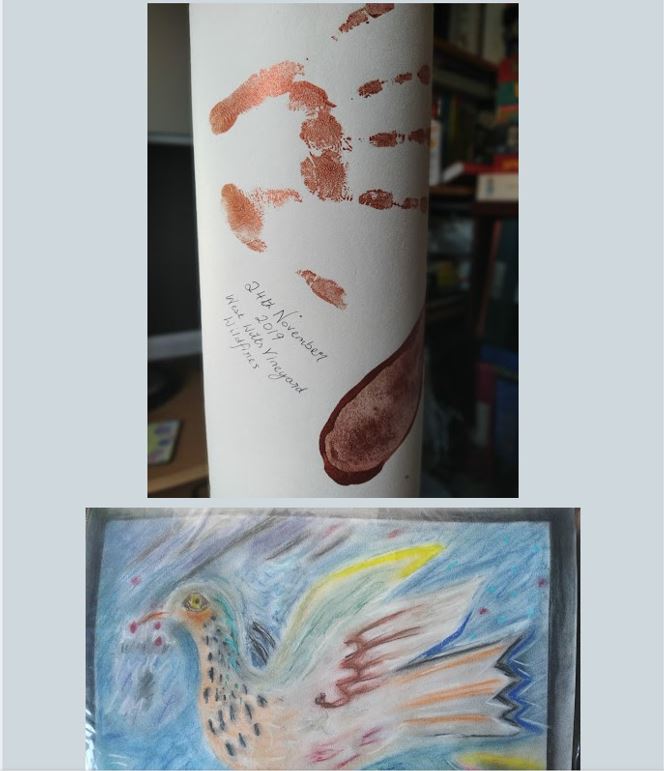
 I preferred the countryside freedom, the open space and definitely the muddiness of the fields and climbing of trees on a Sunday to all that boring stuff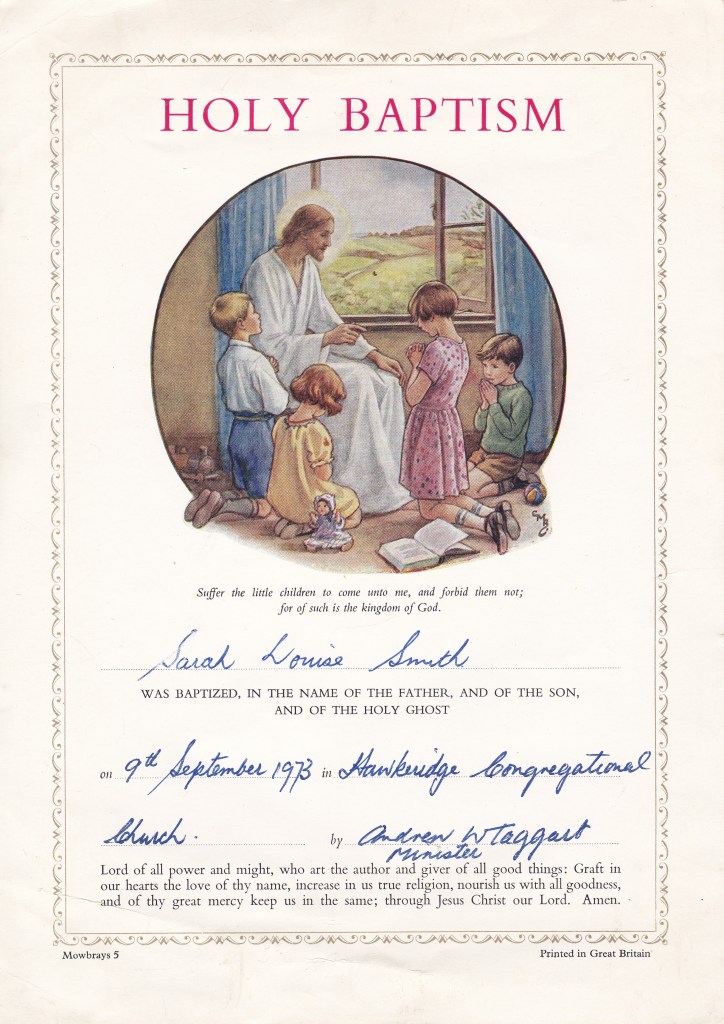

 Just have a conversation with anyone else that has done the same and make up your own mind.


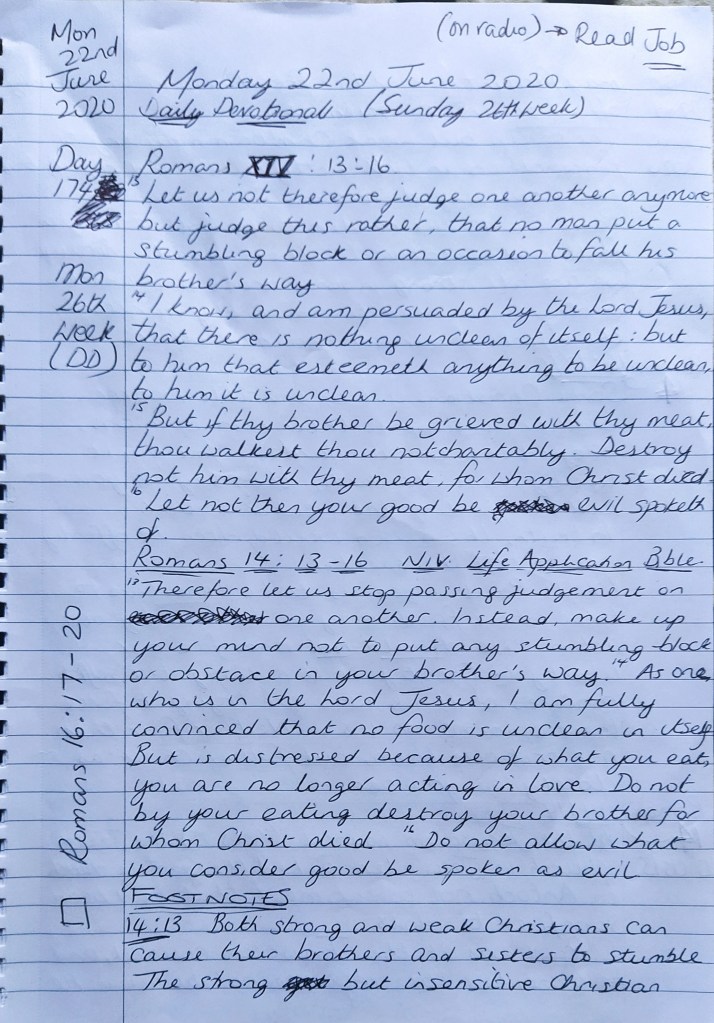
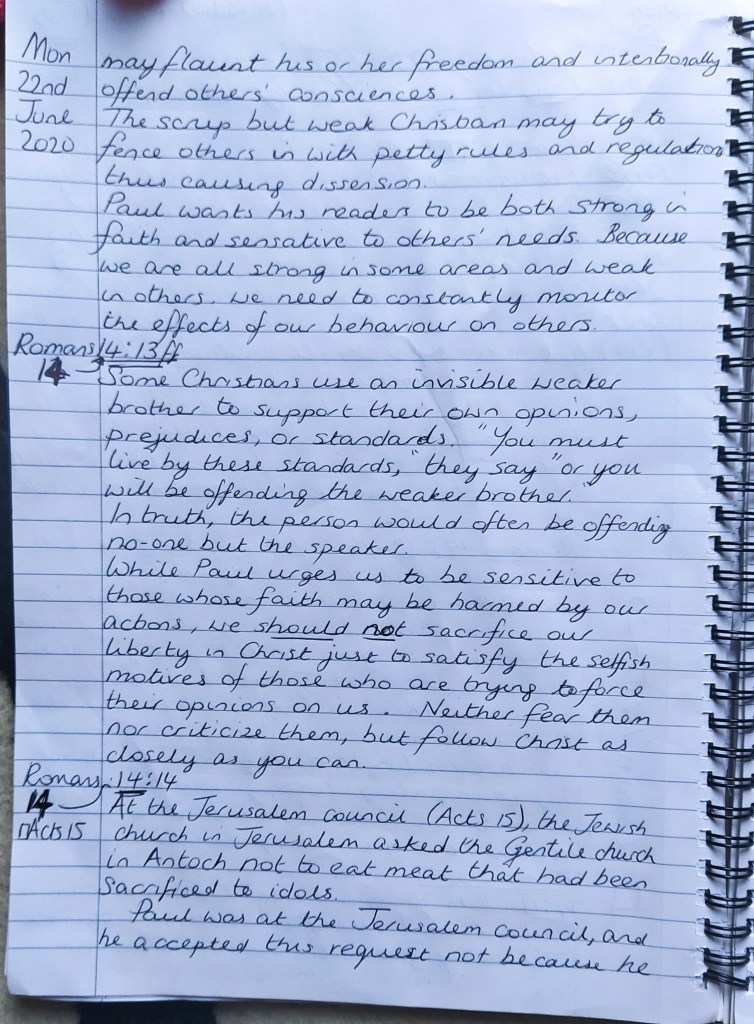










 This quite obviously was when I began to totally lose touch with reality.





 My New Life - Stepping Out With Jesus